Current Projects
Brain Dynamics of Human Communication

Human communication requires the coordinated activity of distributed neural networks operating across multiple temporal and spatial scales. We investigate how the brain encodes speech, language, facial expressions, and other social signals, and how neural dynamics adapt during challenging listening conditions such as background noise. Using EEG, MRI, computational neuroscience, and network analyses, we study the mechanisms that support successful communication and language comprehension.
Selected projects
- Neural speech tracking during natural speech processing
- Speech perception in challenging listening environments
- Reading and language development in adolescents with hearing impairment
- Neural network dynamics underlying speech communication in adverse situation
Social Interaction and Hyperscanning
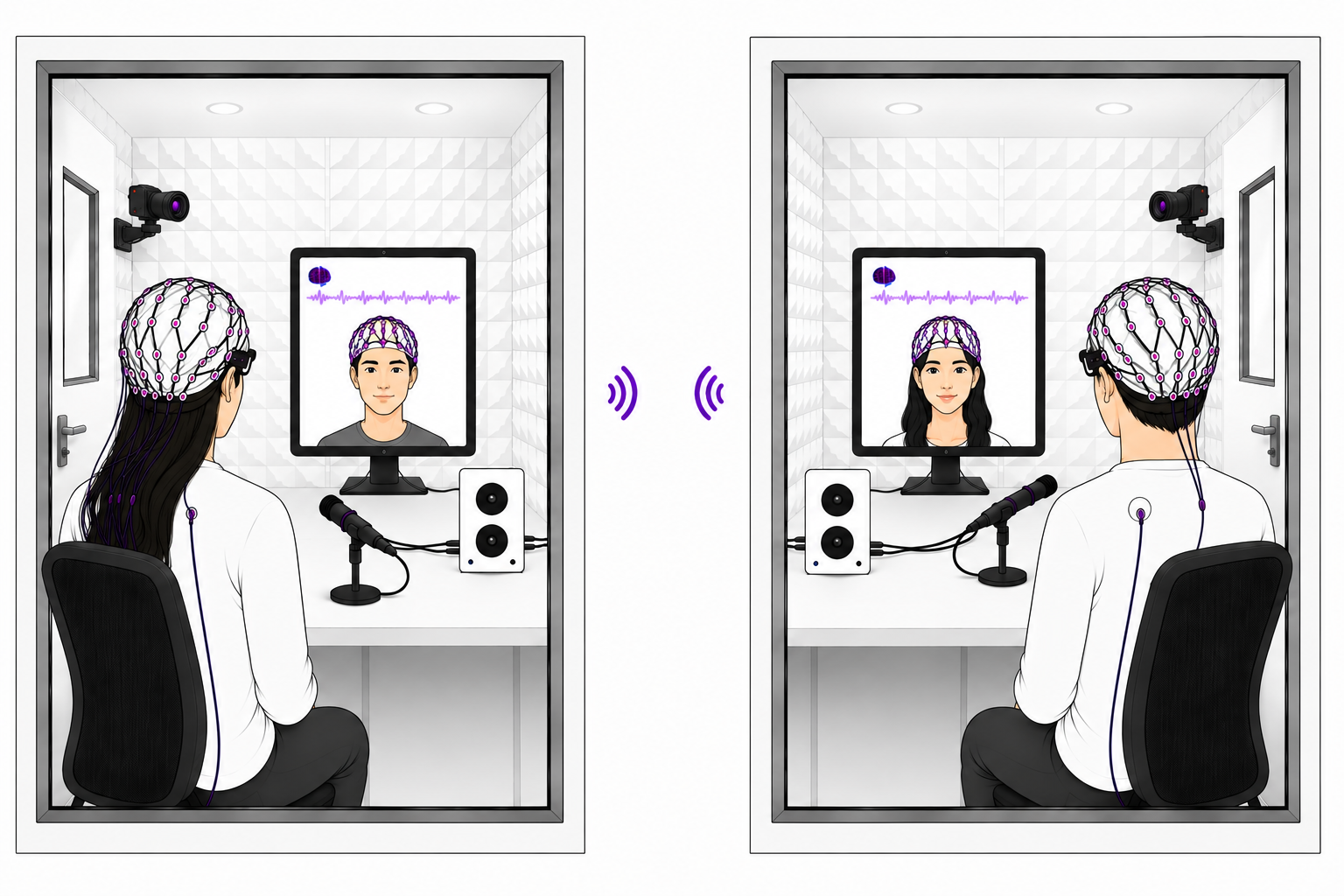
Communication is fundamentally social. Rather than studying isolated individuals, we investigate how brains synchronize during natural conversations and collaborative tasks. Combining hyperscanning with behavioral analyses, facial expression analysis, and physiological recordings, we explore how successful communication emerges through dynamic interactions between communication partners.
Selected projects
- Development of hyperscanning methods within NCCR Evolving Language
- Neural and facial synchrony during early language development
- Interpersonal communication in naturalistic settings
Brain–Body Dynamics
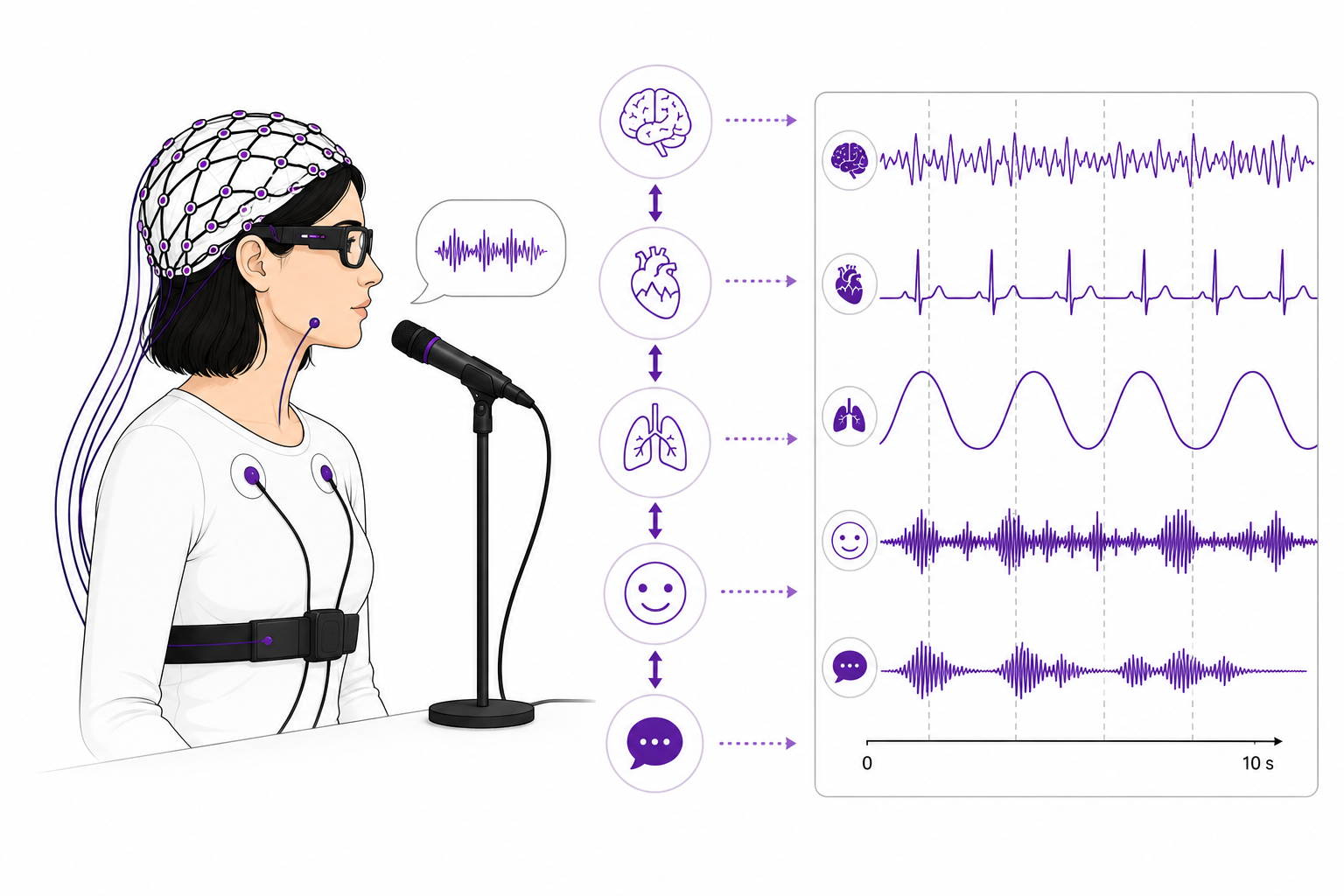
Communication is accompanied by continuous changes in autonomic physiology. We investigate how neural activity interacts with cardiovascular and respiratory systems and how these brain–body interactions contribute to communication, attention, emotional regulation, and social interaction.
Selected projects
- Brain–heart interactions during communication
- Physiological synchrony during social interaction
- Multimodal assessment of communication
Communication Across Health and Disease
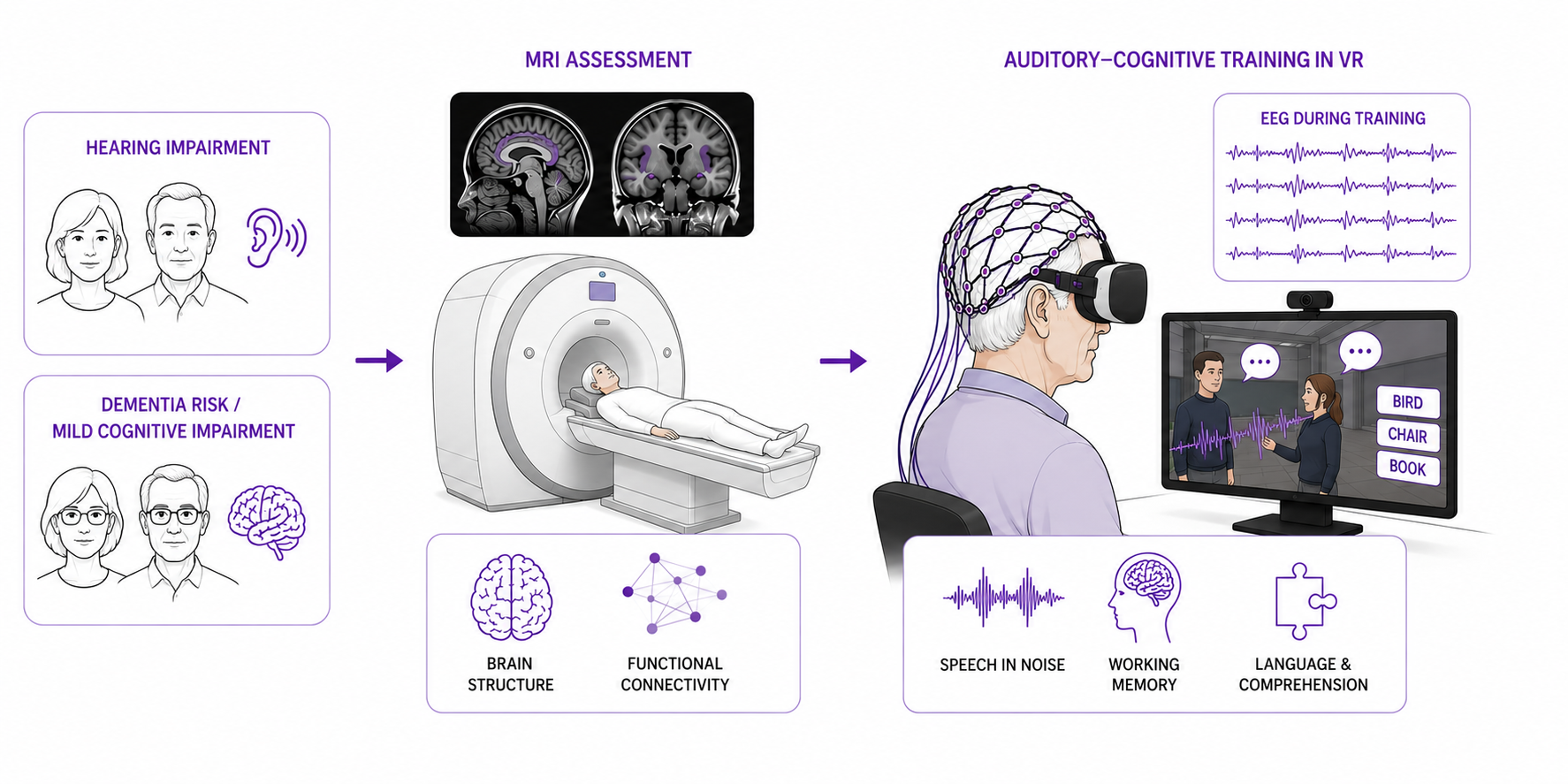
Communication changes throughout life and is affected by sensory, neurodevelopmental, psychiatric, and neurological disorders. We investigate how alterations in brain dynamics contribute to communication difficulties in conditions such as hearing impairment, autism spectrum disorder, ADHD, aphasia, dementia, and other neurological disorders. Our goal is to identify objective biomarkers that support earlier diagnosis and personalized treatment.
Selected projects
- Hearing impairment and cognitive decline/dementia
- Hearing rehabilitation and auditory-cognitive training
- Communication biomarkers for psychiatric disorders such as ADHD
Artificial Intelligence and Digital Biomarkers

Speech and language provide a rich window into brain function. We develop artificial intelligence methods for analyzing speech, language, and behavioral data to create objective biomarkers for clinical diagnostics and disease monitoring. These approaches aim to support precision medicine through scalable and automated assessments.
Selected projects
- DiSpLa – Digital Speech and Language Diagnostics
- AI-supported speech analysis
Translational Neurotechnology
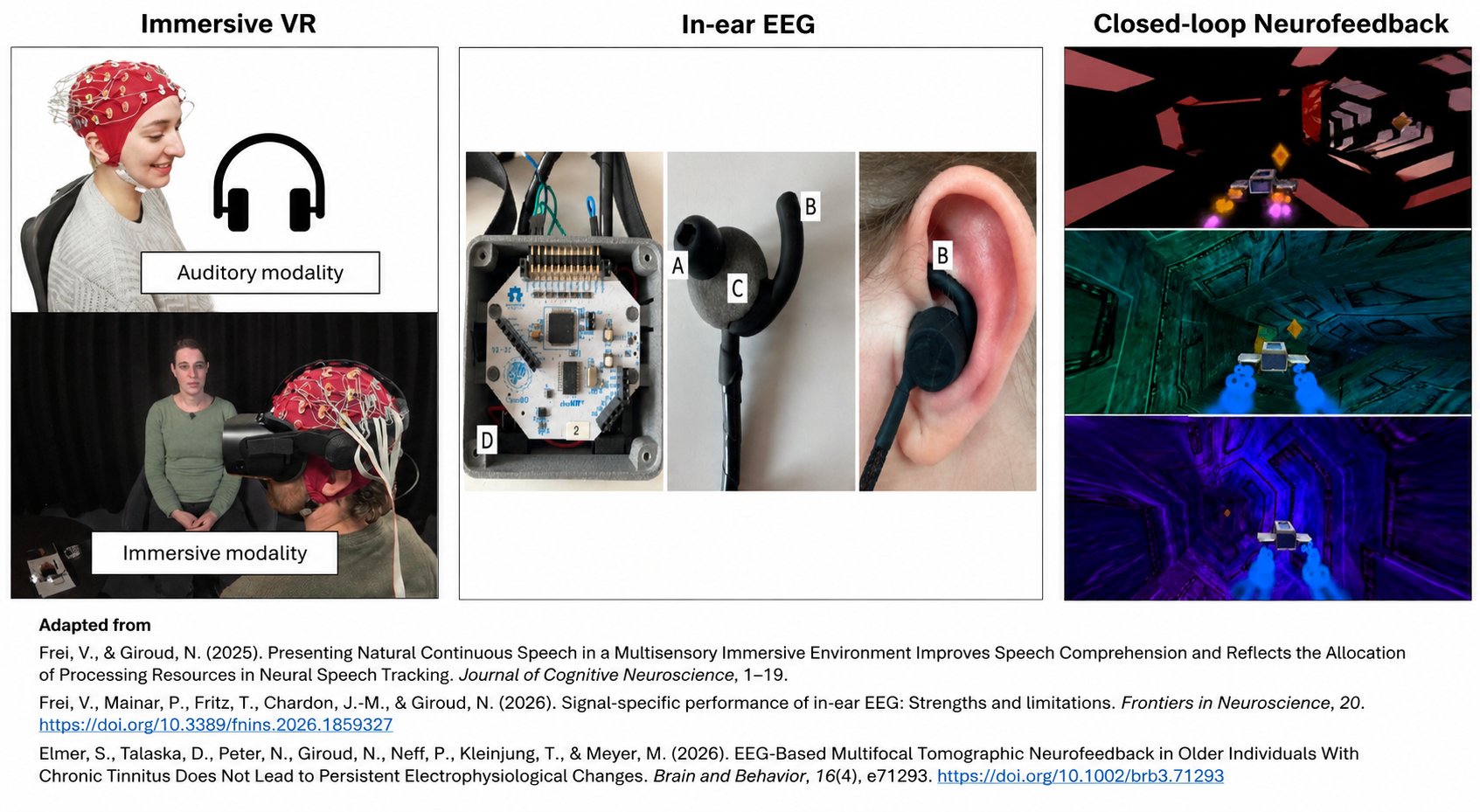
We translate discoveries from communication neuroscience into innovative technologies for research and clinical practice. By combining immersive virtual reality, wearable sensing, artificial intelligence, and closed-loop neurofeedback, we develop next-generation tools that improve communication, rehabilitation, and brain health.
Selected projects
- BrainPerform: Using brainwave analysis for performance analysis in high-expertise contexts (e.g., professional musicians)
- Virtual reality for language and cognitive assessment
- Wearable technologies for real-life neuroscience
- Closed-loop neurofeedback for communication and brain health
Funding
Find out more about the team, here.